

This one might ruffle some feathers and challenge your world view, and ya know what?
Good!
But first, I used to LOVE a good hip opener. The deeper and juicier the BETTER. And if I was amongst the chosen few to receive a hands-on assist then I want ALL of your weight and pressure to send me even further into a lil puddle of goo.
And then…I got injured. Multiple times and places. And then I got a diagnosis that really (and finally) solved all my problems (well, sort of). But it took me over half a decade to get there…
My world view was first challenged by a cute lil article I read in Yoga Journal (probably) circa 2017-ish that despite my best detective skills I can’t seem to find. So while I can’t provide direct quotes from the article, what I do still hold dearly is some of the asana variations that were included - if you have taken my classes you have been directly impacted (and maybe even felt personally attacked). I also remember the light bulbs that went off in my brain when I read the opinion of the author that many hips needed to be strengthened FIRST, and then opened MAYBE later.
Before writing this blog, I tried to find the original article that inspired me so many years ago and I was 1. Unable to find it and 2. Raising my eyebrows at the abundance of “open your hips” links and the scarcity of consideration for human habits and anatomical patterns.
There were a few articles like this one and this one and this one but none of them were THE one and none of them said what I wanted them to say. So here we are…
What I’m not trying to do is recreate that blog and pass it off as my own original thought. But rather offer how this perspective shift shifted me.
As a LMBT and human on the hyper mobility spectrum, my personal lived experience has only bolstered this shift in my understanding of how the (my) body works. Without going into all the stories, I’ve spent the last few years recalibrating my own sensory system into knowing that this sensation previously labeled as “tight” does NOT need to be stretched, that it in FACT needs to be strengthened. (Please know that I was VERY stubborn in this realization and ignored several experts that led to clear cause and effect injury.) All of my life I had been taught that this sensation was tightness and the remedy was to stretch it. When in fact this sensation (in my body) is signaling instability and the message is instead “please don’t stretch me, I’m doing everything I can to hold it together.”
The reason: our habits and patterns as humans who tend to be much more sedentary than our previous ancestors which has led to a rapid atrophy in muscles (mainly our side glutes aka gluteus medius and gluteus minimus). I’ve heard this referred to as “dead butt syndrome” which really just means that through repeated sitting our glutes often forget how to glute. And our bodies are super smart and will reassign muscles tasks to continue to get the jobs done. Often, it’s our quads that bear the brunt of the work.
And in the yoga world we seem to have this hyper fixation with opening our hips which I fear is doing our students a disservice in the long run. Especially when we consider that a LARGE portion of our yoga practitioners are also on the hypermobile spectrum. Taken one step further, hypermobility is often platformed and praised in our yoga world. For me this type of attention has led to me to NOT listen to my body and for my practice to become more of a performance than something personal and sacred.
My best example of this is when I attended my first yoga retreat back in 2013:
I was being cue-ed into a super deep (and bound) twist. My hip had been feeling a little wonky but then the teacher was looking at me and cue-ing directly to me, so I followed. And while I achieved the desired shape, I felt/heard what I described as a gremlin deep up in there. I knew at that moment that I had either healed myself or really messed myself up. Obviously, it was the latter or there wouldn’t be a story. My whole life I have easily been able to move from a standing position, hinge at my hips and place my whole hand on the floor in a forward bend. Suddenly, I couldn’t get my hands to reach past my knees, and sitting for more than 30-minutes created a sharp, shooting, ouchy pain. I spent the next several years trying every modality that came my way including: bodywork, cupping, acupuncture, spinal network analysis, foam rollers, and transformational kinesiology. While each session made some progress, I got my biggest shifts after emotional releases and yeah this one time I frolicked. AND I really up-leveled my teaching as postures that were previously “easy” for me were suddenly impossible. Although super annoying, I learned A LOT during that time period and became intimately familiar with both the psoas and piriformis muscles - who both were contributing to my pain.
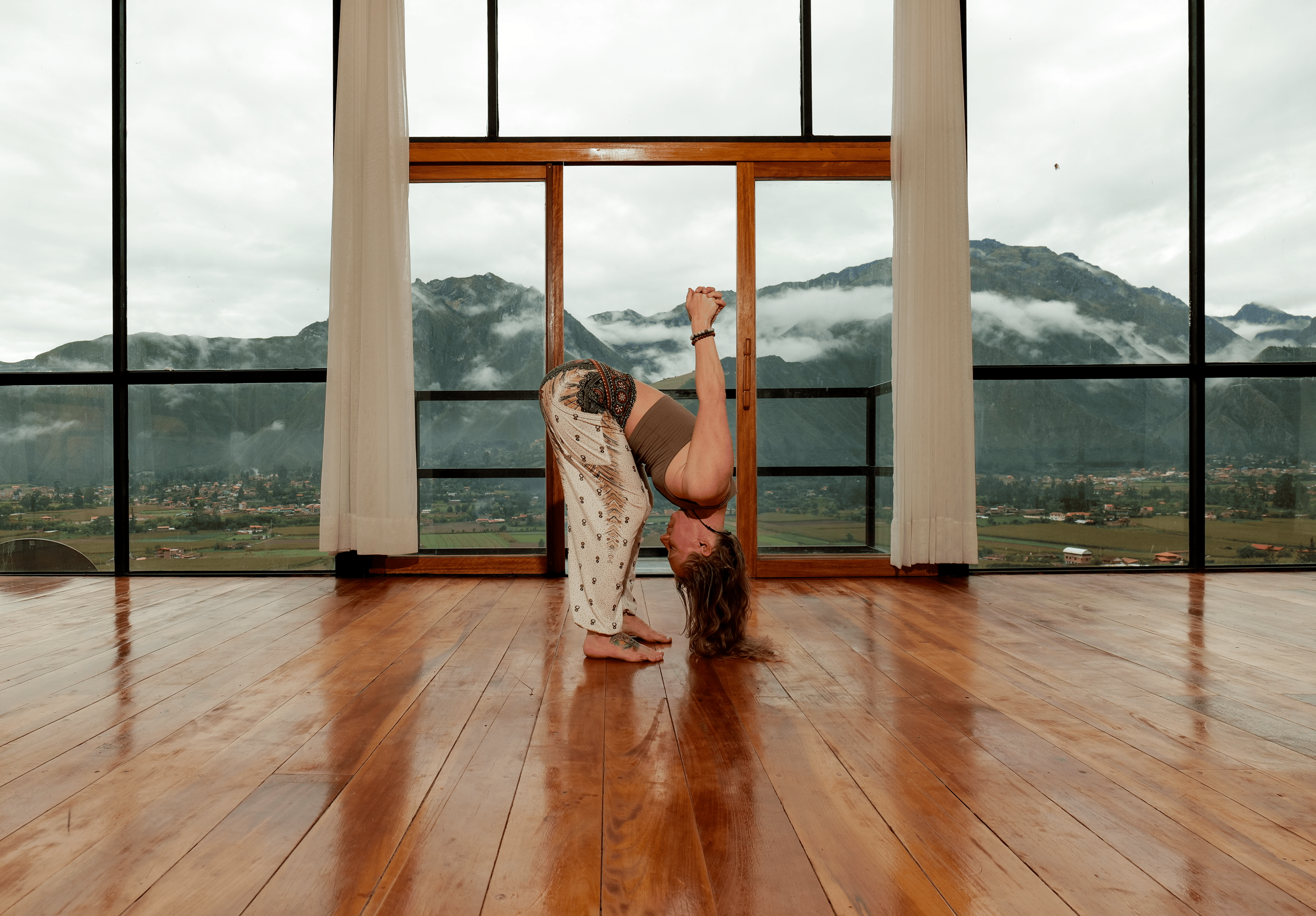
Included in this blog were several different asana variations that used familiar asanas in sneaky ways to re-fire up those glutes. In all my smartness, I went ALL IN and decided to teach those variations - yep, all of them - in the next few (more like 5) of my classes over the course of 36-ish hours. Welp…when I woke up that following morning I could barely roll over and place my body weight on my sides I was SO SORE!! I knew there was some major TRUTH in that article and also that it wasn’t necessary to sprint, this was going to be a marathon.
If I could go back in time, I would commit to strength training then instead of waiting another 6-ish years to really understand that lesson. And some of us are more hard-headed than others…
True story: when I first (and finally) came to terms with my hypermobility it came with the realization that the way I had been practicing yoga asana was hurting myself. I actually stopped practicing for several months all together and just did weights and resistance bands. To this day, a full hour can be really hard for my body AND I’m not at all ashamed to lay down and take savasana early.
And sure, sometimes I feel like a MAJOR fraud in continuing to teach asana when I’m not always able to commit to the practice always. But also, I teach for people like me. For folks to maybe not go so far down the road of not knowing what their bodies are actually trying to tell them. For the ones who are learning to re-calibrate their own inner senses away from the mainstream and back to self.
More specifically, I emphasize stability in the joints prior to doing the twisty or bendy or balancing things.
Specifically-specific, you will often hear me use this cue in lunges (high or low):
Pull your front hip back (or front thigh bone back) and squeeze your inner thighs in to create a strong foundation in your hips*.
*This replaces the controversial “square your hips” cue which I understand it’s purpose but also I recognize that perfect squares aren’t possible in our bodies as we don’t really do perfect angles (Fun fact: bones grow in spirals - like tree roots)
I use this in many other shapes as I’ve noticed that students tend to let the front leg side forward and this cue activates the side glutes. The hugging in action of your inner thighs helps hold that activation in place.
I also use this cue in balancing asanas:
Lift the inner arches of your feet towards the ceiling. Root down through your standing leg and stand up taller in your standing hip. Build your strength from the ground up and stand taller.
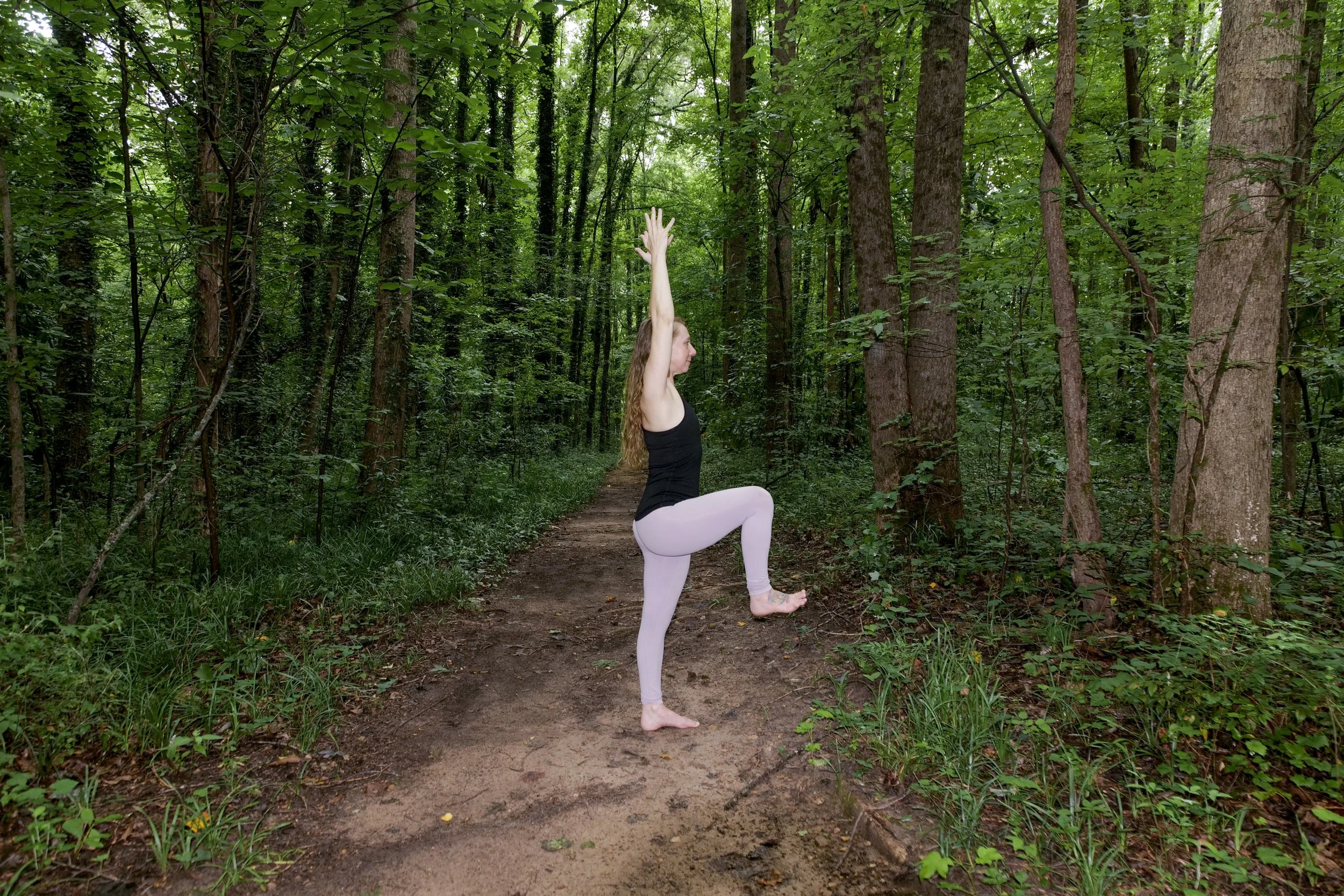
This one came from observing how many people were dumping down into their standing leg and knowing how everything we do standing begins with the foundation in our foot/feet.
Things I also do differently as I prioritize strengthening hips over opening them:
I don’t only offer ½ pigeon - I utilize variations like deer or supine figure-4 as the first options that I cue in detail and then say if you know and absolutely need ½ pigeon, go for it.
If I am sequencing a class that requires attention to the hips (crow, grasshopper, standing figure-4, etc), then I double-down on my attention to strengthening right from the get-go so I can feel ok about asking the hips to open later on.
I don’t demo unless I’ve done my own work to keep my own body strong and stable. When I take care of myself, I set a good example to all and can be more of service.
I don’t tell students where they “should” feel anything. For hypermobile folks, usually when we feel it, we’ve already gone too far. For all folks, they may feel like they are doing it “wrong” if they don’t feel what the instructor says and may overextend themselves in order to get there. Also, remember when I said that our bodies are super smart and are going to adapt to get the job done?! This means that we may each experience similar-ish shapes uniquely and as teachers we don’t want to override our student’s lived experiences and present moment sensations.
I avoid adding hierarchy to students (and asanas) with increased range of motion (or flexibility).
Finally (and in closing to this accidental blog that I thought was just going to be an IG caption):
This serious question came up for me the other day while leading Yoga Teacher Training: What does listening to your body? actually even mean?!
Or is it another one of those phrases that has been repeated and co-opted so many times that it’s lost all meaning?
And, are we even trained/equipped/educated to know what listening to our body entails?!
Or, have we been systematically disconnected and dissociated from our inner senses and instead being sold products, workshops, and 12-month masterminds that promise to bring us back to ourselves?!
One more questions: WHO profits from my disconnection and dissociation and do I continue to consent to this energy (and image) vampire?
But also, in some hyper mobile folks, their bodies respond by tightening up and they actually lose range of motion…