

Biased observation: We throw the word yoga around because it is known, because it sells, because it’s catchy and alluring maybe even slightly exotic…
But as soon as one pulls back a layer (or 2) we discover that the yoga that we currently identify with is rather removed from its traditions and sometimes even contradicts itself.
Differently stated, much of what has been labeled as yoga is highly separated from its roots aka appropriated. And while this narrative isn’t a new one nor one that is even unique to yoga, it is worthy of consideration around the truthfulness (and integrity) in our words when it comes to advertising and offerings.
But also, maybe it’s not all bad…
“On this path effort never goes to waste, and there is no failure. Even a little bit of effort toward spiritual awareness will protect you from the greatest fear.”
Bhagavad Gita 2.40 as translated by Eknath Easwaran
But does this give us permission to teach/practice/post about diluted traditions and rituals and call it “Yoga”?
I’ve spent a lot of time/energy on the great debate of “is that even yoga?” when met with endless trends (hello, goat yoga - and now I guess we are trying snake yoga, which no and hell no) that seemingly get further and further away from intentions of presence and purpose. I’ve witnessed myself (and probably others) perform the postures while distracted and/or multitasking. While all these animals are super cute, how focused am I when a goat is climbing on my back?
Side confession: I will admit that seeing a recent advertisement for “Penguin Yoga” did pique my interest but only because I LOVE penguins, so much. I even prioritized an excursion with the best chance to see them while on a trip to the Galapagos in October 2023 and have a tattoo (and video) to prove it!) and then I remembered that penguins smell pretty terrible and poop a lot…
Through trial and error, I discovered that my energy is better spent by creating systems/language/trainings that is in alignment with what I believe rather than destroying others for not holding my POV.
ICYMI…I’m co-owner of a wellness center in which my official title is “Yoga Director”
Before we opened, I tasked myself with the creation of class names and writing descriptions. I was met with my biases, community expectations, industry standards and my own sincere desire to do things differently while still being able to pay the bills. I carefully crafted clear descriptions that allowed for each teacher to share their unique magic. I opted for commonly accepted English words for the class titles so as not to create confusion by using sanskrit or other words that may not immediately make sense. My dilemma was that our center offers several styles of practices including meditation, tai chi and qi gong so there needed to be a way to differentiate between the different modalities that again made sense. One of my biz partners opted to add “Yoga” to every class which I soon discovered mildly triggered me. It was one of those things that immediately bothered me but without a solution I tried to be cool about it, and then one day I just kinda snapped and let my feelings be known in the group chat.
And then I sat with myself…
Like why was I so reactive?
Was it just that what I wrote had been altered without my consent?
Was it being annoyed at the redundancy of the extra word?
And then I remembered a particular time in my life where I was also rowdy and ranting that if all the studios weren’t going to even consider that Yoga is spiritual practice and only focus on how hot and sweaty they get or how well they perfect complex shapes that they should just call themselves “Asana”...
And here’s where we go from wondering and ranting to learning…
Asana is another Sanskrit word - just like Yoga - but it may get us a little closer to where we find ourselves in our modern day yoga practices.
Most often asana is translated to pose which I have worked really hard to remove from my regular vocabulary. I prefer to use the word “shape” or “posture” but asana is so much more than our IG worthy photo moment.
Its root comes from “as” which means to stay, to sit, to be, or to be established in a particular position.
So what does that even mean? To “take a seat” in a posture.
Ok sure, chair pose that one makes sense - utkatasana.
But how do I “sit” in a down dog - adhomukhasvasana?
How do I “stay” in handstand when I am learning the way to align my shoulders - adhomukhavrksasana?
How do I establish myself in crow - bakasana - do I have to caw?!
And what even is an Eka Pada Koundinyasana?! One footed who? And why are there two of them?!
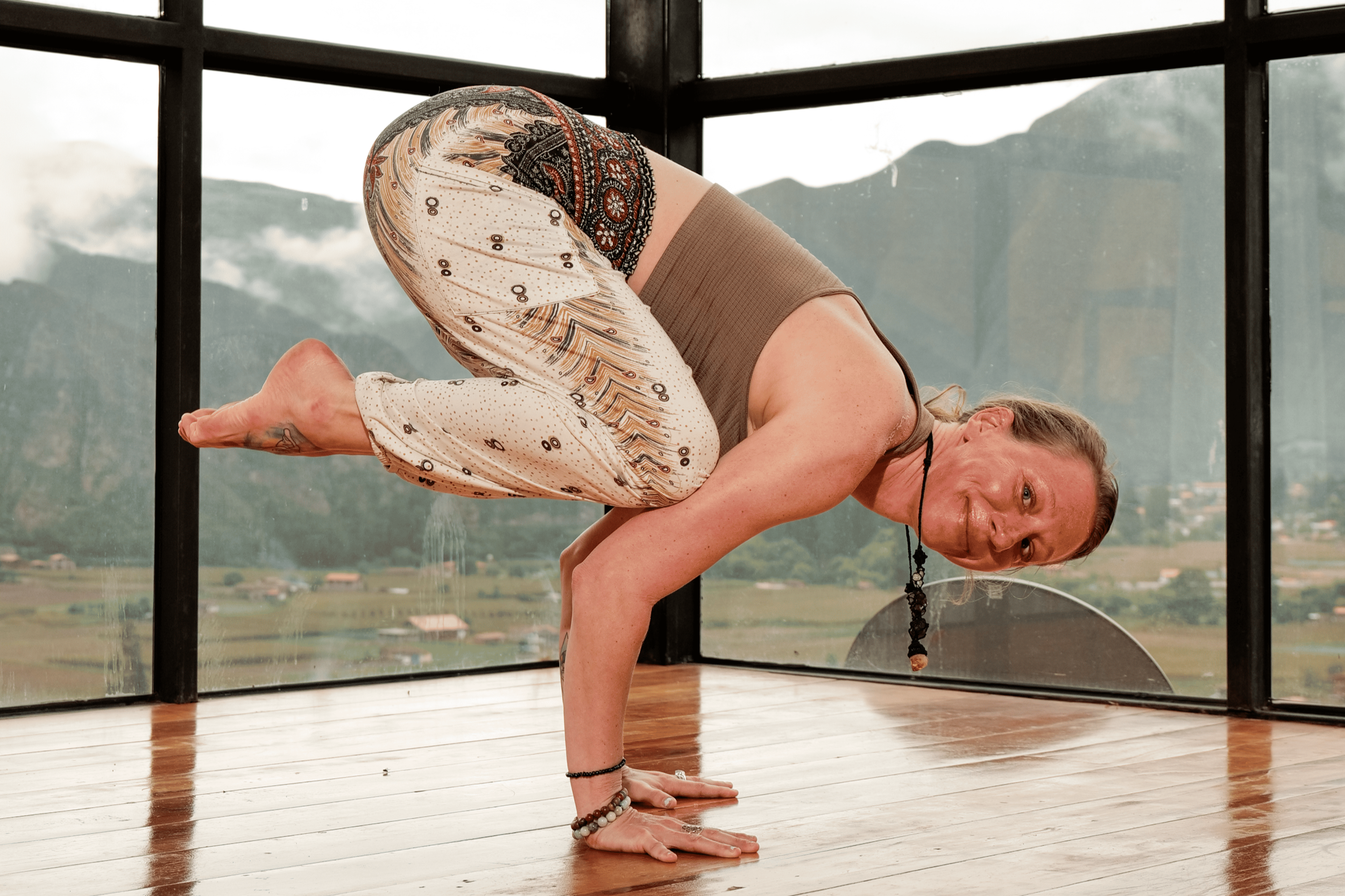
This is where I like to consider the re-categorization of asana from noun to verb. That we are in fact asana-ing in our yoga classes - yes, it’s a tongue twister.
That these shapes we make with our body are more than what can be captured in a static and still moment. Asanas serve as a container for an experience. It’s not just the final posture that we arrive in, it's the way that we move into and out of those positions. It’s the way we find our breath within the shapes and notice, but aren’t bothered by, the way in which our minds are churned by what’s revealed within the process. Releasing our grip on what specific asanas must look like also allows for to explore impactful variations meant to challenge or soften the experience,
Zooming out a bit…
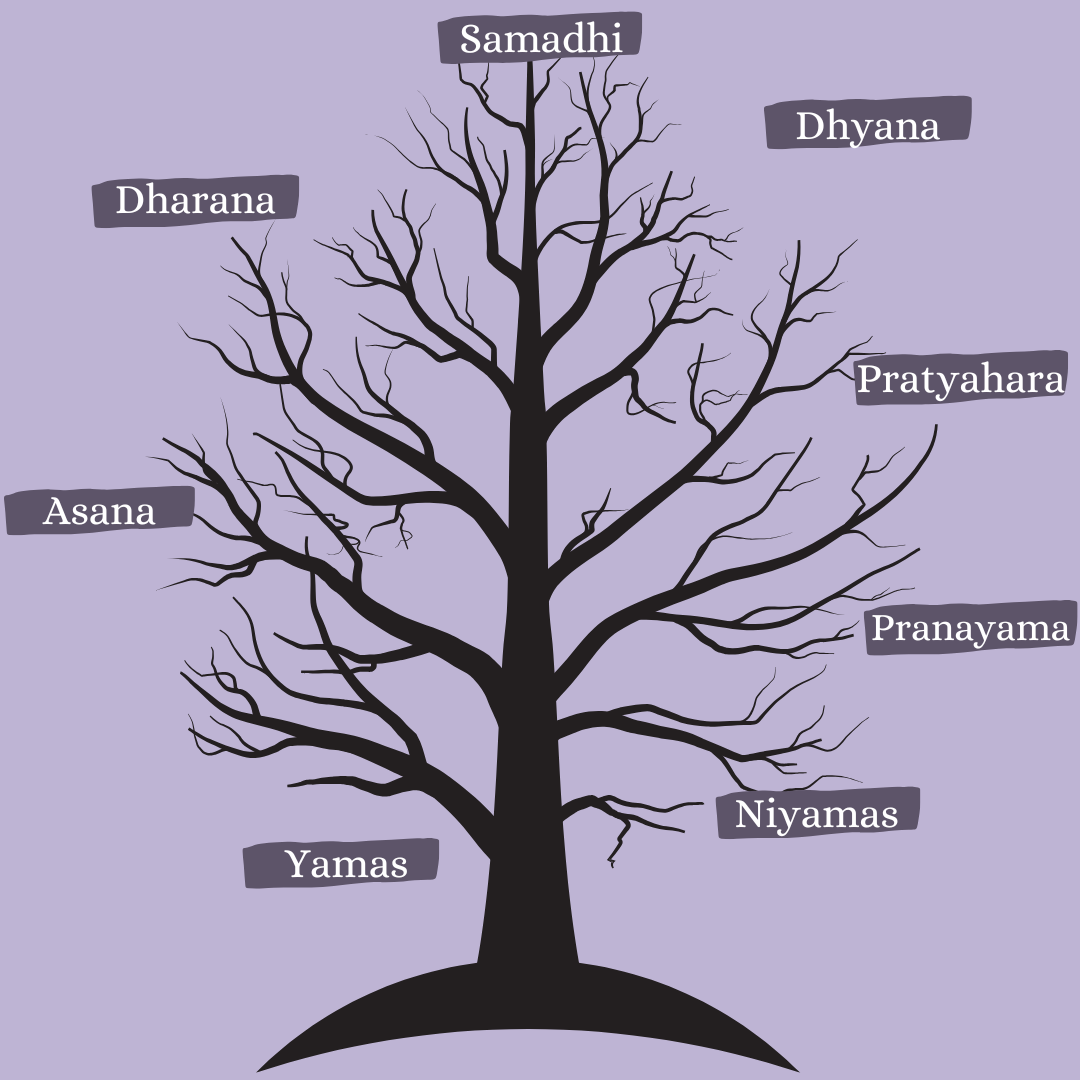
In the 8-limb (ashtanga) system, as established by Patanjali, asana is just 1 of the 8 limbs. Briefly, yamas and niyamas (our ethical considerations), pranayama (breath), pratyahara (sense withdrawal), dharana to dhyana to samadhi (meditation pathway to bliss) and sure, asana. Historically, our yamas and niyamas were explored before asanas were considered but currently these first two limbs have been more reserved for philosophy or trainings and don’t always come first, if at all.
For my yoga teachers, I was taught (and I teach from) a 5-pillar system for creating classes that allows me some flexibility. In this system, asana is 1 of the 5 pillars that also non-coincidentally also includes pranayama, savasana, meditation and intentional theme-ing that totally could include and allude to the yamas and niyamas. Even in a so called “yoga” class the asanas the postures are just one thing that I’m considering when I teach.
One more lil detour to a relevant side story: as part of my Ayurveda training there was a session on marketing workshops and trainings. The short version is that we were encouraged to use English words instead of Sanskrit words. I tried it and it was 2020 and was quickly course corrected by a stranger on the internet who made a BIG deal out of my wording and reposted my event in a cultural appropriation group. Even in hindsight, I didn’t deserve all that and yeah, sure it got my attention.
Now back to our original issue: how to name classes that are easy to understand without completely stripping the practices from the culture?
With all my angst, past stories, and sincere desires, we arrived at creating categories for our classes and utilizing the power of the pause, and colon:
Asana: Flow Asana: Restorative Asana: Power Flow
Meditation: Yoga Nidra Meditation: Guided Meditation: Pranayama
Ah…balance has been restored.
Language matters and the more clear we can be the more likely we are to attract “our” people.
Ya know the dreamers, the ones who maybe didn’t fit in anywhere else, the ones who know that Yoga IS social justice, and the ones who are willing to sit with themselves and question their triggers and beliefs.
Grateful for the pack that has gathered at Moon Wolf and this opportunity to do things a bit differently.